Share this article:
At Readywear Cleaners, suit alterations are some of the most common work we do, and also some of the most misunderstood when it comes to cost and timing. Suit alterations typically take a few days to two weeks for straightforward work, while more involved changes can take several weeks. If you're wondering how much a tailored suit costs, basic alterations may run about $30–$50, while more complex jacket work can run higher, especially once you're combining more than one change on the same garment.
How long it takes to tailor a suit depends on what needs to change. Hemming trousers is one thing; restructuring a jacket is another. Suit construction, extra fabric inside the seams, and the need for another fitting can all affect the timeline and price.
How Should A Suit Fit?
A well-fitting suit should follow your shape without pulling, sagging, or restricting normal movement. During a fitting, we look at the whole suit first, then narrow in on the areas that are throwing off the fit.
Shoulders: The jacket should sit cleanly across the shoulders without divots, overhang, or tightness. Getting this area right from the start matters, because major shoulder adjustments are more involved.
Collar and chest: The collar should rest against the shirt collar, while the buttoned jacket should lie smoothly without pulling.
Sleeves: Jacket sleeves typically end near the wrist bone, leaving a small amount of shirt cuff visible.
Pants: The waist should stay comfortably in place, the seat should lie smoothly, and excess fabric should not bunch heavily over the shoes.
Jacket length and overall proportions matter, too. The goal is a balanced fit that looks clean while leaving enough room to sit, walk, and move comfortably.
What Parts of a Suit Can Be Tailored?
There's quite a bit we can adjust on a suit. Common alterations and tailoring include shortening sleeves, shaping the jacket through the waist, hemming or tapering pants, and adjusting the trouser waist and seat. These changes can correct many of the fit issues we see in everyday suits and formalwear.
The suit's construction sets the limits. Letting out a seam only works when there's enough fabric inside, and shortening a jacket too much can throw off the pockets, buttons, and overall proportions. Even sleeve work can get more involved when a jacket has working buttonholes. Shoulders are another story — altering them can mean rebuilding part of the jacket.
That's why we inspect the garment before recommending the work. A change may be technically possible, but that doesn't always mean it's the right choice for that particular suit.
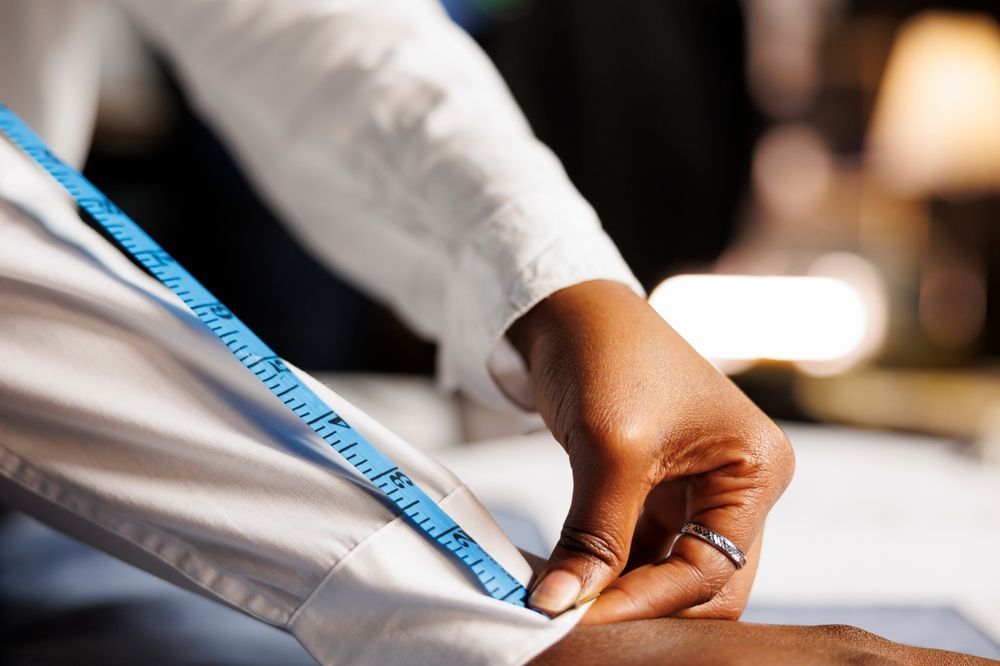
Common Suit Alterations for Jackets and Pants
For suit jackets, sleeve length and waist shaping are two of the adjustments we see most often. Shortening the sleeves cleans up excess fabric at the wrist, while taking in the sides can reduce a boxy fit. Depending on the jacket, we may also address collar fit or sleeve width. Each adjustment has to work with the jacket's lining, seams, buttons, and original proportions.
Pants bring a different set of fit concerns. Hemming sets the length and break over the shoe, while tapering removes excess fabric through the leg. Waist and seat adjustments can correct looseness, pulling, or an uneven drape.
We also look at the jacket and pants together. A jacket can fit beautifully, and the full suit can still look off if the trousers pool at the shoes or pull through the seat.
How Much Does Suit Tailoring Cost?
How much a tailored suit costs depends heavily on the work involved. A simple trouser hem and a jacket that needs to be opened, reshaped, and rebuilt are very different jobs.
| Common Alteration | Typical Range* |
|---|---|
| Hem suit pants | $20-$30 |
| Adjust trouser waist | $30-$50 |
| Taper trouser legs | $30-$55 |
| Shorten jacket sleeves | $30-$60 |
| Shape jacket waist | $40-$65 |
| Shorten jacket length | $50-$80 |
Actual pricing varies by garment and tailor.
These figures are per alteration. A suit that needs several changes at once — say, jacket sleeves, jacket waist, and a trouser hem together — adds up across each line item, which is how a fuller overhaul can move past $100 even though no single adjustment does.
Even two sleeve alterations can be different jobs. Working buttonholes, linings, patterned fabrics, available seam allowance, and previous alterations can change the labor involved. That's why we inspect the suit before quoting the work.
How Long Do Suit Alterations Take?
Most suit alterations take anywhere from a few days to about two weeks. A trouser hem or straightforward sleeve adjustment may be finished within several days, while a suit needing multiple changes typically takes longer. Complex jacket work can extend the timeline to several weeks, especially if the garment needs to be opened and reconstructed.
Timing also depends on the shop's workload. Wedding season, prom season, and other busy periods can add to turnaround times, and some suits need a second fitting to fine-tune the finished fit.
If you need to know how long tailoring a suit will take for a wedding, interview, or another fixed date, bring that date to the first fitting. We recommend leaving time for a final try-on rather than picking up the suit right before the event.
What to Expect at Your Suit Fitting
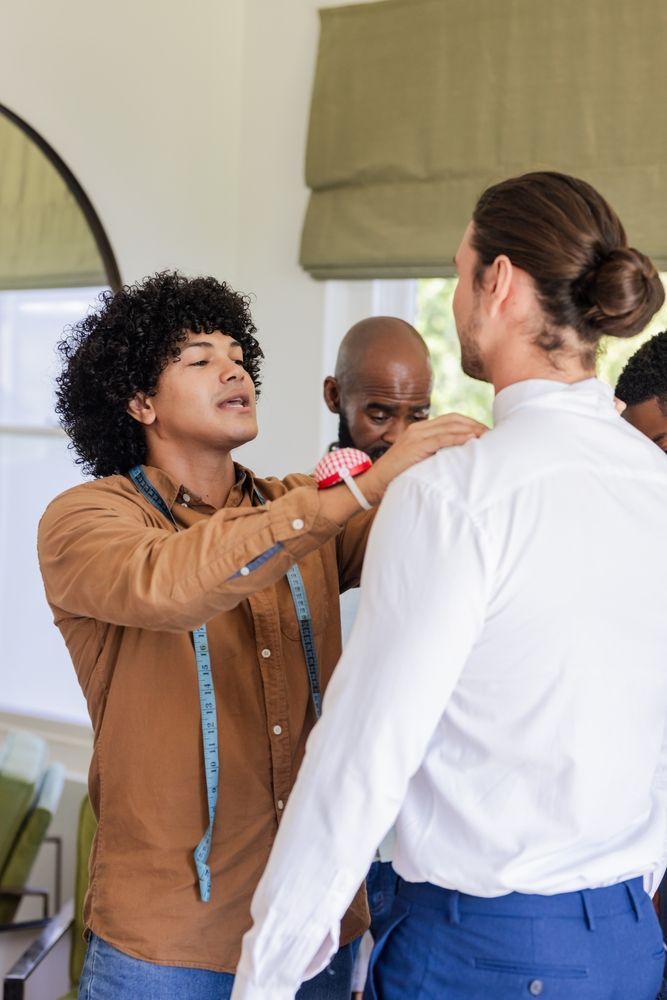
A suit fitting is fairly straightforward, but what you wear and bring matters. Come in with the dress shirt and shoes you plan to pair with the suit so we can see where the sleeves and pants should fall.
- Put on the full suit. We look at the overall balance first, then check the shoulders, collar, sleeves, waist, seat, and trouser length.
- Move naturally. Stand normally, button the jacket, sit down, and walk around. A suit needs to look clean without feeling restrictive.
- Review the adjustments. We'll mark the areas that need work and discuss what makes sense for the garment, along with timing and next steps.
One detail that sometimes surprises customers: we may check each side separately. Bodies aren't perfectly symmetrical, and a good fit accounts for those small differences.
Tailor First or Dry Clean First? How to Prepare Your Suit for Alterations
If a worn suit has stains, odors, or visible soil, dry cleaning before alterations gives the tailor a clean garment to work with. Otherwise, bring the suit in as-is. We can look at its condition and the alterations needed, then determine which should come first. Empty the pockets and bring the shirt and shoes you'll wear with the suit.
After alterations, professional care can help maintain the finished garment. Questions about
how often to dry clean your clothes or choosing
dry cleaning or washing at home depend on fabric, construction, wear, and the care label. We use
GreenEarth® cleaning, an odorless silicone-based process that's gentle on fabrics.
Recent Resources