Share this article:
One of the most common questions we hear at Readywear Cleaners is a simple one: does this need to go to the cleaners, or can it go straight in the wash? The honest answer: it depends on the garment, and it's not always a simple dry-clean-or-wash-at-home choice. Many everyday clothes can be safely washed at home, some items are better off professionally laundered, and others truly need dry cleaning to hold their shape, texture, and finish. Understanding the difference between these options can help protect your clothing and keep it looking its best.
How Dry Cleaning and Home Washing Actually Differ
The biggest difference between dry cleaning and washing at home is how your clothes are cleaned. If you've ever asked, “What is dry cleaning?” the answer is simple: it uses a specialized cleaning solvent instead of water. Home washing, on the other hand, uses water and detergent to remove sweat, everyday dirt, and odors. Both methods work well when they're used for the right types of clothing, but dry cleaning is often a better choice for garments that can lose their shape, texture, or finish when washed.
Each method also has different strengths. Home washing is ideal for most everyday garments, while professional dry cleaning is especially effective for delicate fabrics, tailored garments, many oil-based stains, and garments that benefit from professional pressing. Choosing the right cleaning method helps preserve your clothing's fit, appearance, and lifespan.
When Your Cleaner Launders Instead of Dry Cleans
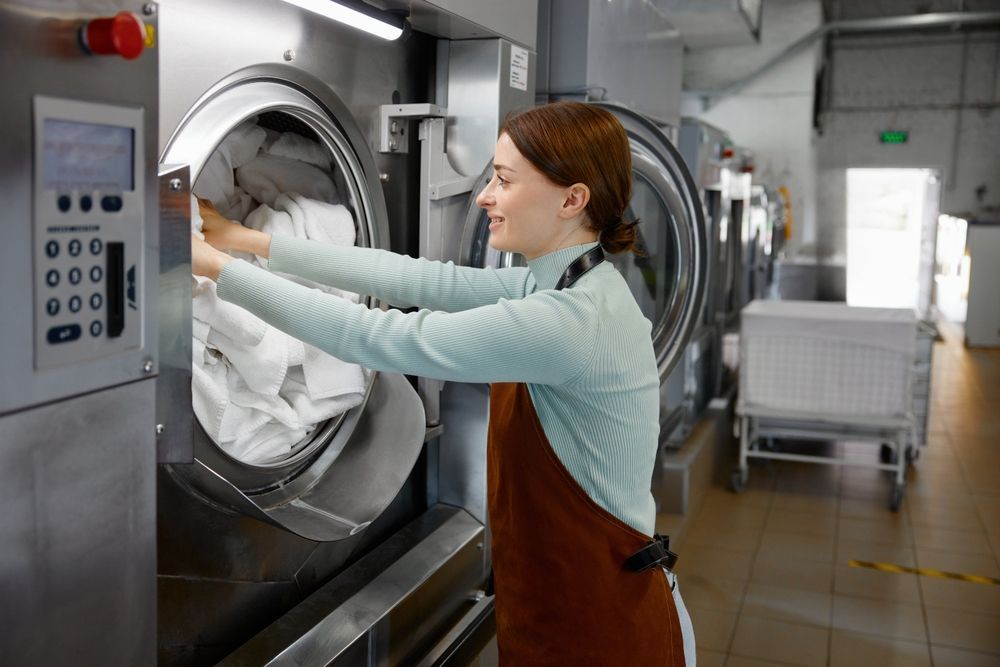
Not every garment that comes to a dry cleaner actually goes through the dry cleaning process. Items like cotton dress shirts are typically laundered — washed with water and detergent, much like you'd do at home. The cleaning method itself isn't the difference. What sets professional laundering apart is the finishing: careful stain inspection and treatment before washing, precise pressing and ironing, and consistent folding or hanging that's difficult to match with a home iron and ironing board.
In other words, you could wash a cotton dress shirt at home, but professional laundering adds a level of finishing and consistency that home washing typically can't match — which is why it's worth considering even for garments that don't strictly require dry cleaning.
Which Fabrics Need Dry Cleaning to Survive
While fabric is important, it's not the only factor to consider. A garment's lining, structure, and decorative details also affect how it should be cleaned.
Professional dry cleaning helps protect delicate fibers and preserve the fit and finish of garments that may not hold up well in a washing machine. Common examples include:
Wool and cashmere:
Can shrink or felt when exposed to water and agitation.
Silk and velvet:
Delicate fibers that may lose their texture, color, or finish when washed.
Tailored jackets, suits, and lined dresses:
Water can affect their shape and internal structure.
Garments with pleats, beading, lace, or specialty trims:
Decorative details are more likely to become damaged during home washing.
When an item is labeled “Dry Clean Only,” following the care instructions is usually the best way to help it look its best for years to come.

When Washing at Home Can Ruin Your Clothes
Even garments that look durable can be damaged by the wrong wash cycle, water temperature, or drying method. Water, heat, and agitation can permanently affect delicate fibers and the internal construction of a garment. Wool sweaters may shrink, silk can lose its smooth finish, and tailored jackets can lose the structure that gives them their shape. Decorative details like pleats, beading, lace, and specialty trims are also more likely to become damaged during home washing.
Before washing an unfamiliar garment, check the care label and consider more than just the fabric. If an item is lined, tailored, or labeled “Dry Clean Only,” professional care is often the safer choice to keep it looking and fitting the way it should.
Why the Solvent Your Cleaner Uses Matters
The cleaning solvent itself makes a real difference too. We use the GreenEarth® eco-friendly cleaning process, which is designed to be gentle on fabrics while delivering an odor-free clean, without relying on PERC or petroleum-based solvents. It helps protect colors, textures, and delicate details so your garments look their best. Want the full story on GreenEarth, including why some “organic” dry cleaning claims don't mean what they seem? We've broken it all down in a separate post.
Knowing when to wash at home, when to have something professionally laundered, and when it truly needs dry cleaning is just one part of protecting your wardrobe. And if you're not sure how often a
garment needs professional care in the first place, our guide on how often to dry clean your clothes can help. Explore our website at readywearcleaners.com to learn how Readywear Cleaners can help care for your wardrobe, or call 630-443-7700 to speak with our team.
Recent Resources